|
GoodGuysWearTurbans.com The Turban aka Dastaar
"The Sikh turban is a piece of cloth. But, consistent with its shape, it is a diamond, "Given the positive and growing public awareness about Sikhs, "The Sikhs were directed by Guru Gobind Singh to wear a turban.
The Story of Turban Technology
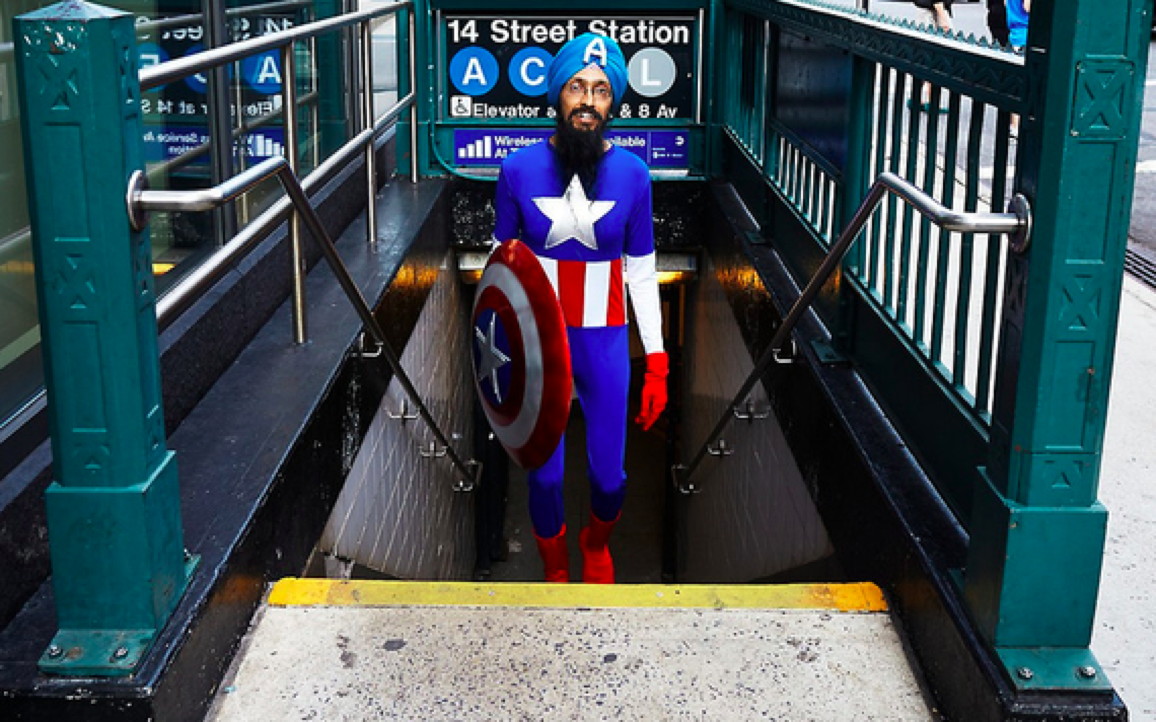
Properly tying the turban enables one to command the sixth center, the Agia Chakra. Covering the head stabilizes the cerebral matter and the twenty-six parts of your magnificent brain, which are interlocked with the neurological system and the electromagnetic field. Covering one's head creates a focus of the functional circuit of the hemispheres, and tunes up the neurological system. The whole head should be covered, not just the Crown Chakra. A head covering that covers the entire head is acceptable; white natural fabric, such as cotton, is ideal. -- See Captain America Videos. See SikhWomenTieTurban.com. See The 'Turbanators'. Also see Turbanators.com. See Why Don't Good Gals Wear Turbans? See The Dastaar (Turban) And Women. See The Turban Is A Crown.
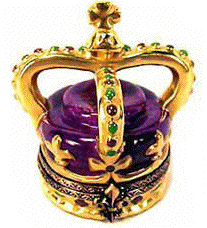
The Turban Is A Crown
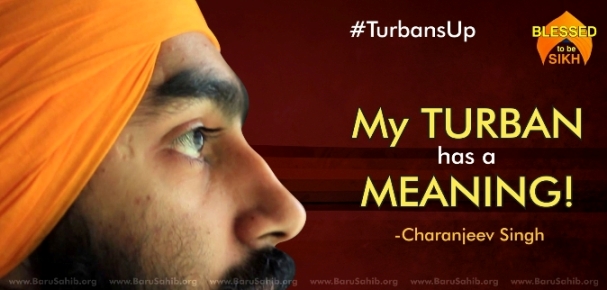
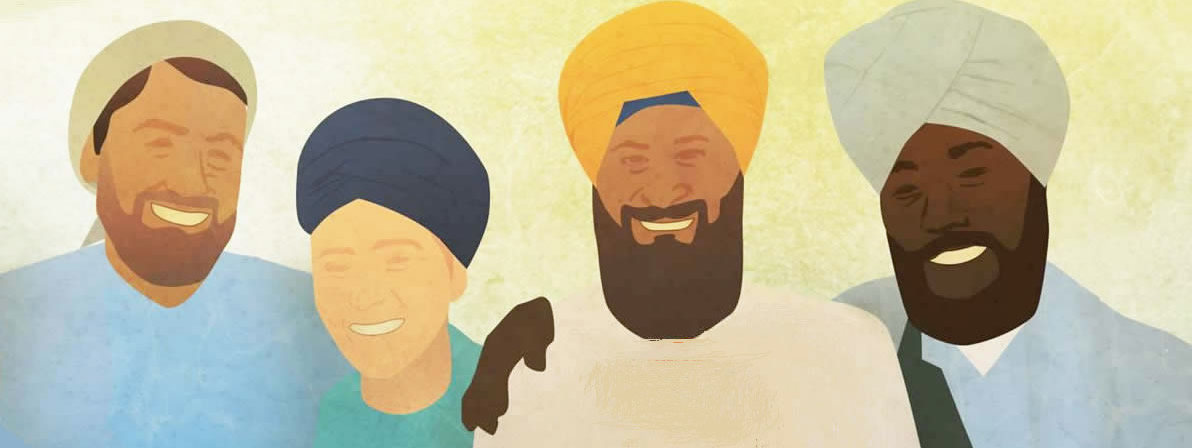
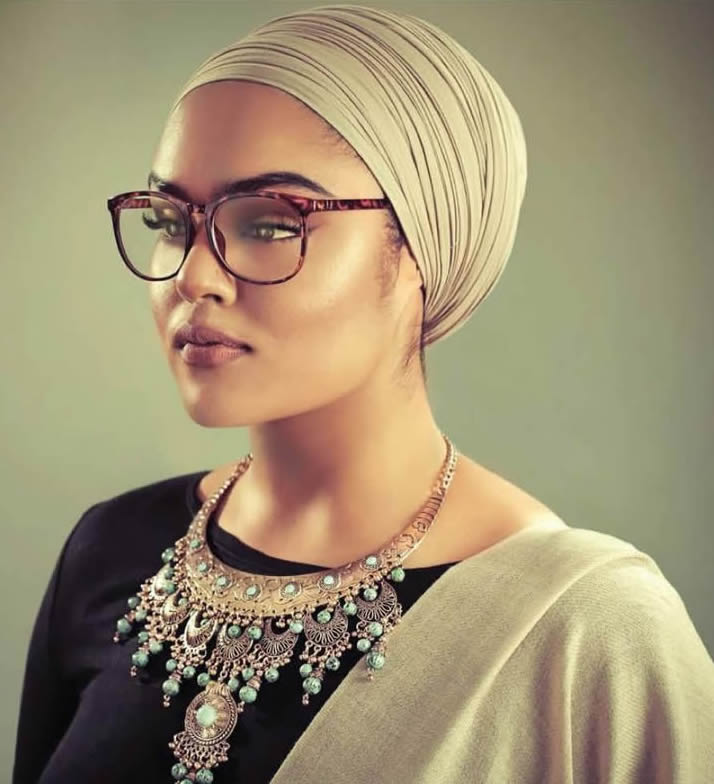
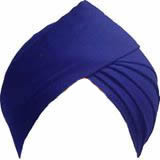
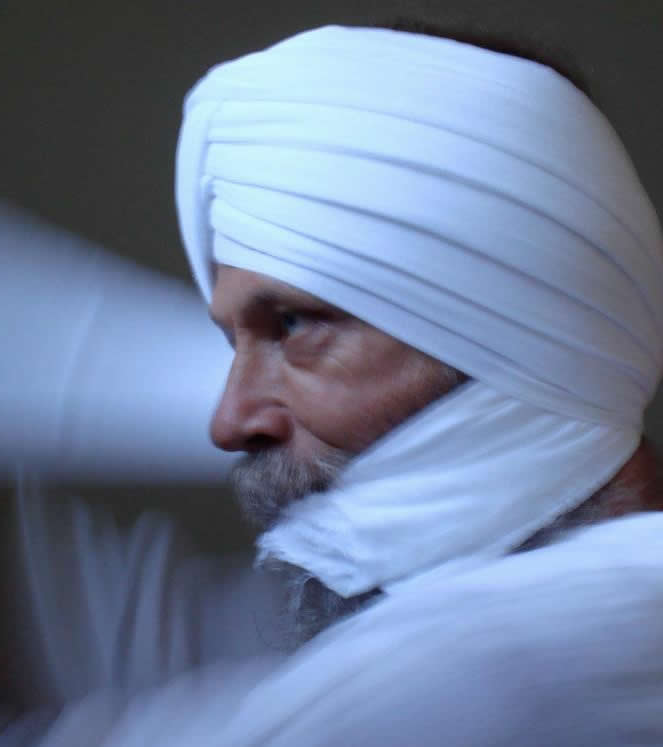
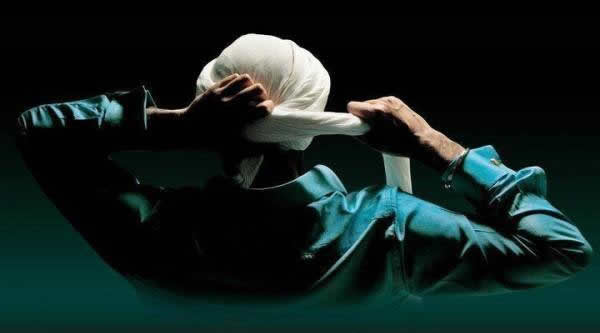
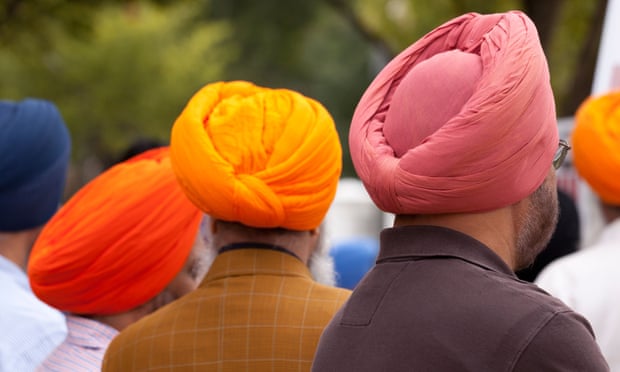
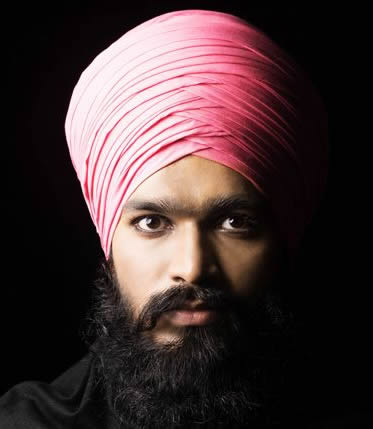
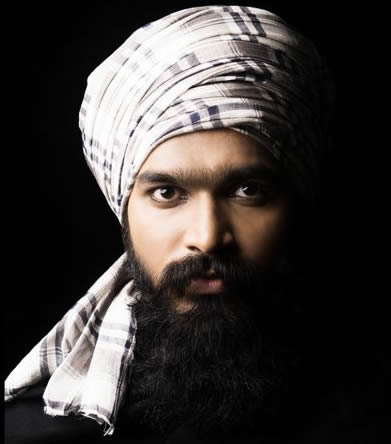
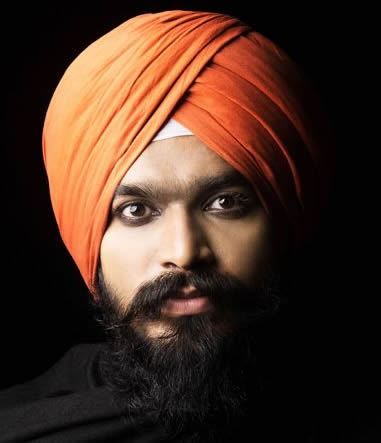
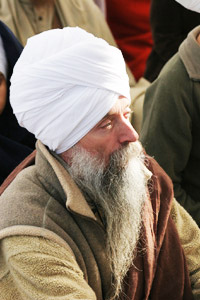
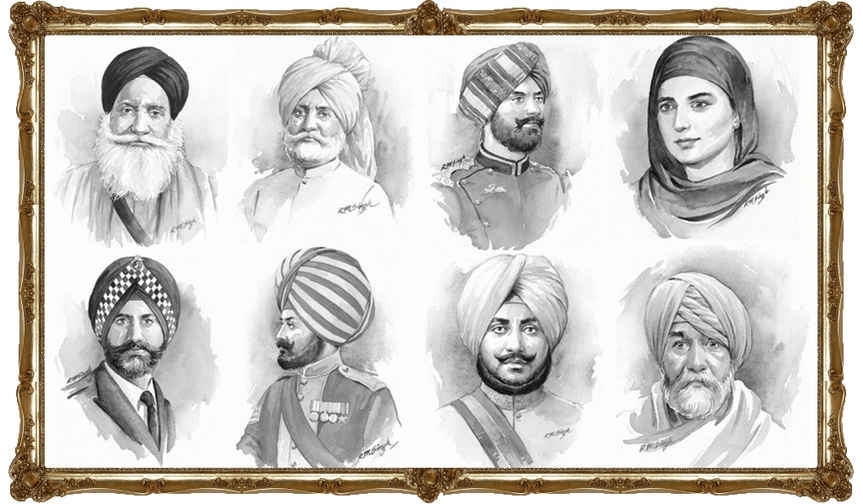
The Sikh turban is worn by both men and women. The turban is not just laid or wrapped around the head, it is tied in a special way as to maximize the benefits to the wearer. The turban does not just sit on top of the head, it caresses the skull in such a way as to enhance the powers of the amazing human brain. Properly tying the turban enables one to command the sixth center, the Agia Chakra. Covering the skull stabilizes cerebral matter and the twenty-six parts of your magnificent brain, which are interlocked with the neurological system and the electromagnetic field. Covering one's head creates a focus of the functional circuit of the hemispheres, and tunes up the neurological system. The whole head is covered, not just the Crown Chakra. Any head covering that covers the entire head is acceptable; white natural fabric, such as cotton, is ideal. In America, the followers of the Sikh Dharma are the only spiritual group whose practice includes the wearing of turban. Sikhs tie turban as a constant reminder to live life as a student (sikh). In addition to its technical aspects the turban acts serendipitously as an effective sociological filter, i.e., a Bigot Detector. A bigot is a person who is intolerantly devoted to their prejudices or opinions. This style originated from the Western 3HO Sikh communities in America. See The 'Turbanators'. See The History of The Turban. See Turban Technology. See New Yorkers Celebrate Turban Day. See GoodGuysWearTurbans.com. See Turban Myths. See Glossary of Sikh Terms. See A Sikh Sense of Humor. See Sikh And Ye Shall Find. See Views On Tolerance. See Tribal vs. Tribalism: An Important Distinction. See SAAAP.org. See MySikhSense.com. See Why Don't Sikh Women Tie Turban? See DualityOptics.com. See Dastaar For Sikh Women. See Woman Claims Her My Right To Tie Turban. See Turban Is Bana. See The Turban As A Bigot Detector. See The Essence of Kaur. See ActForDiversity.com. NOTE: It is NOT a customary practice of the adherents of Sikh Dharma to proselytize. Sikhs often express the term "Sat Kartar," meaning, "God is the Doer." In this sense meaning, only those with such destiny are to be Sikhs.
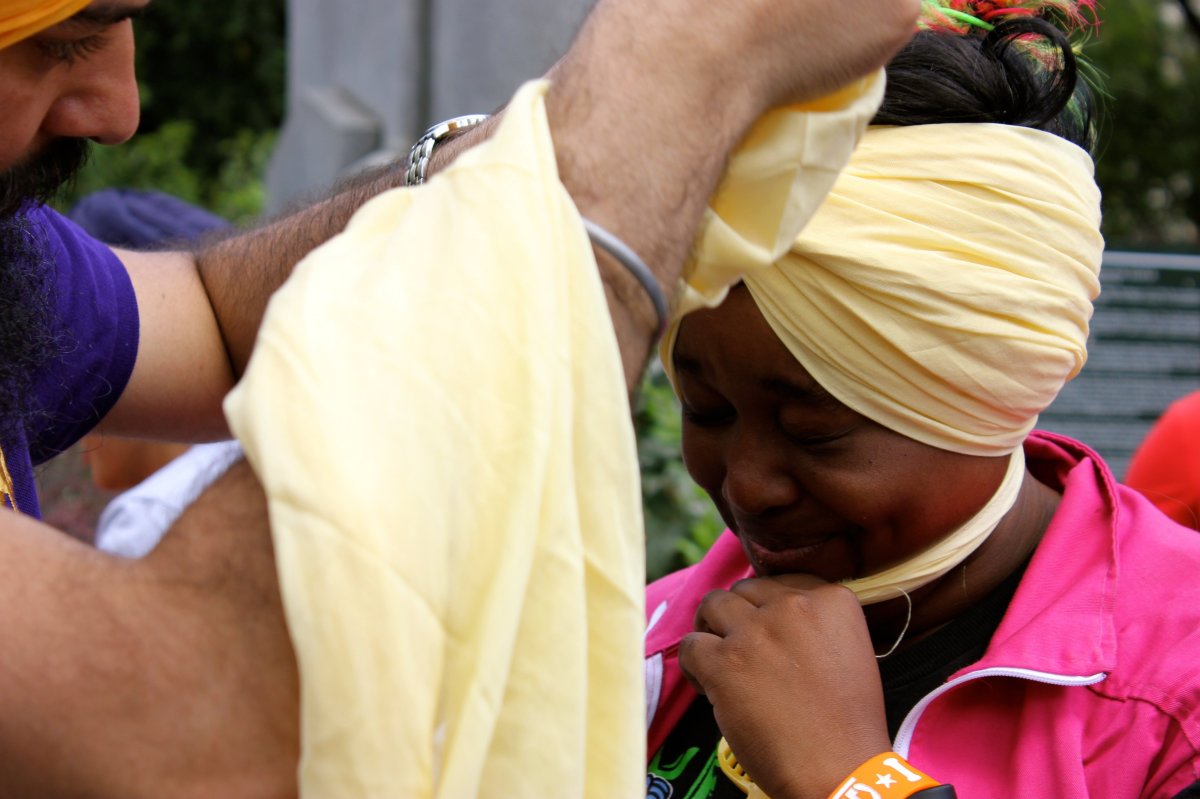
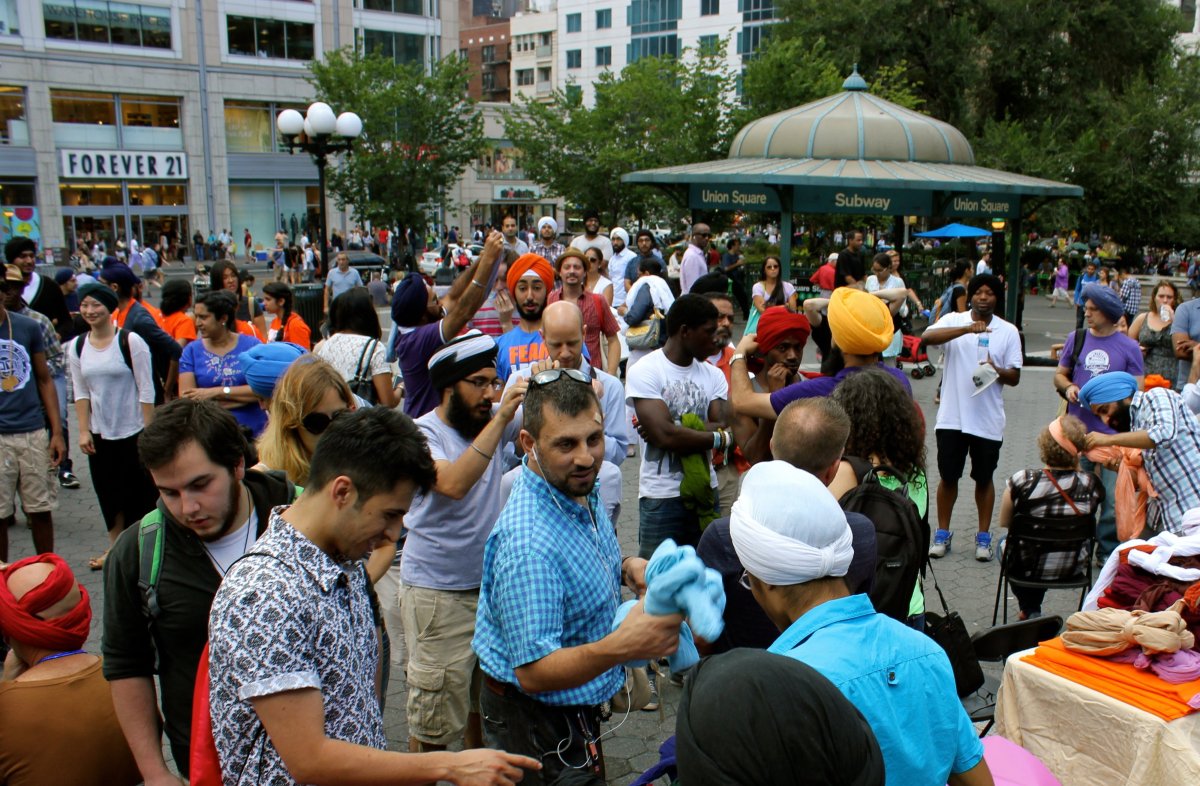
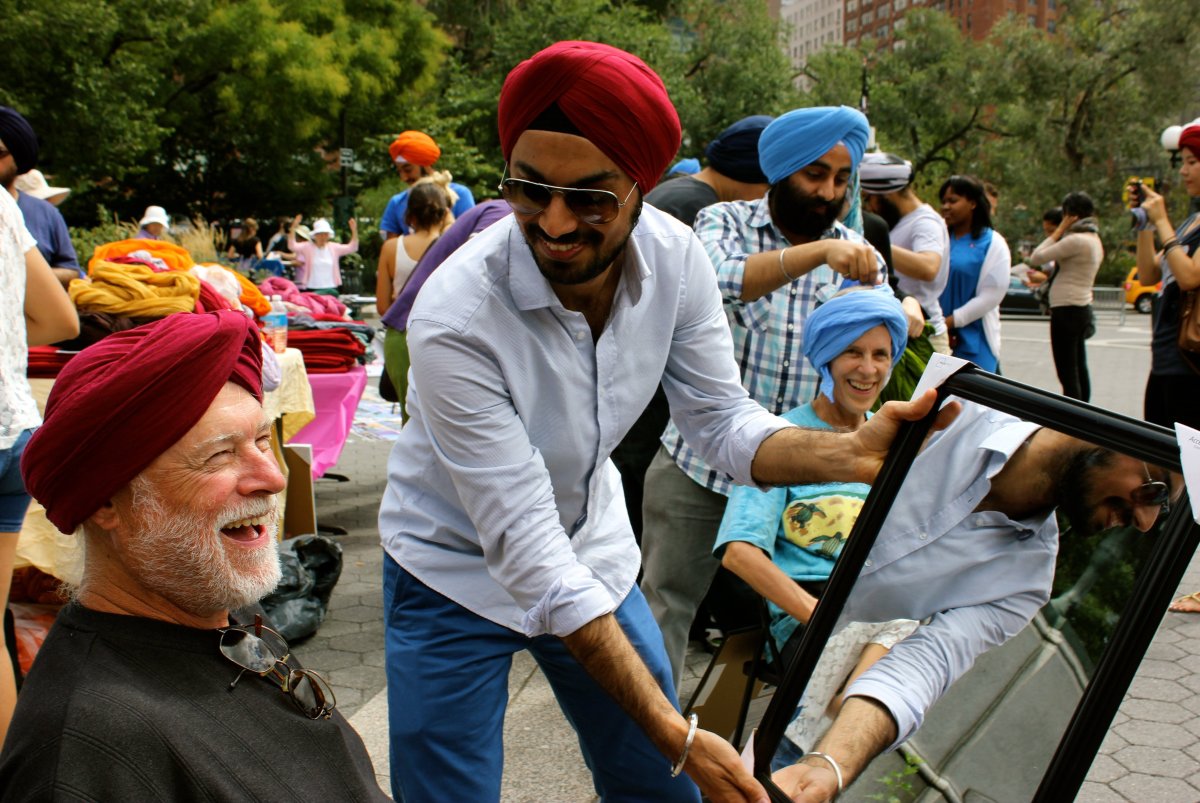
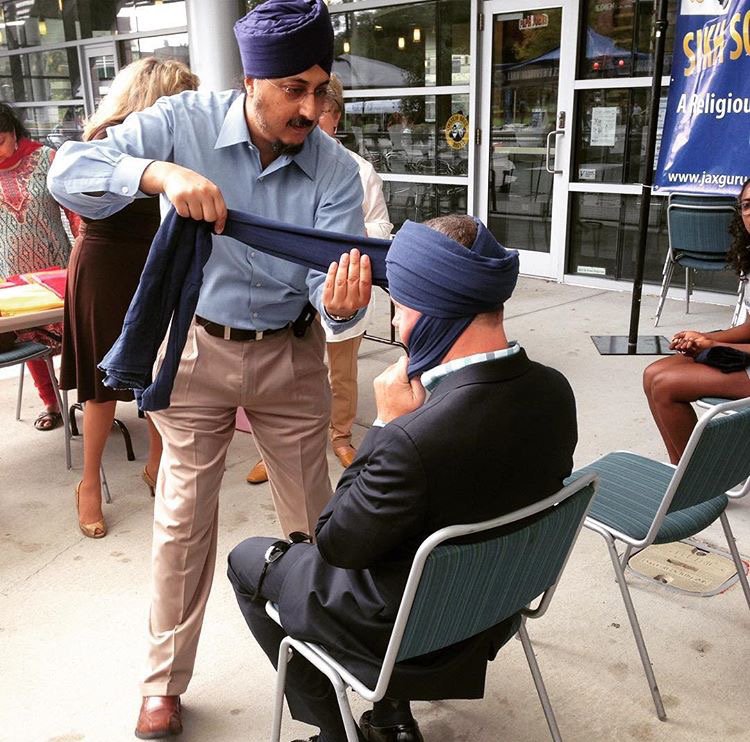
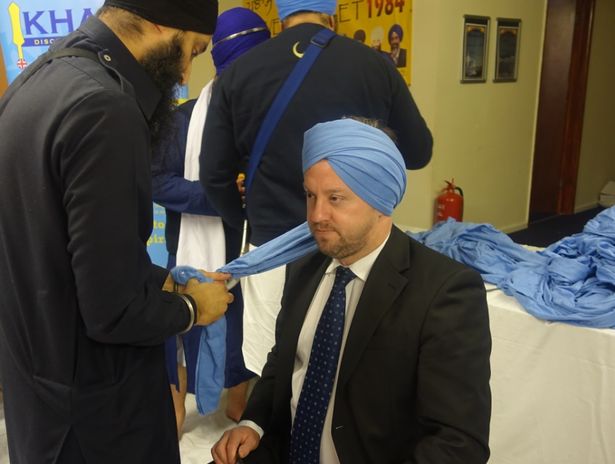
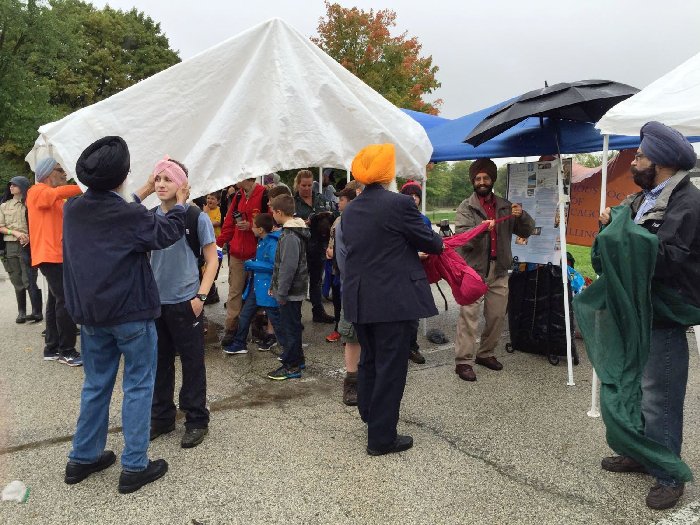
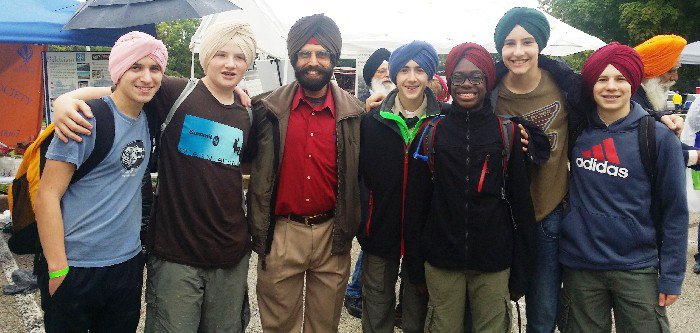
Americans Celebrate Turban Tying Day New Yorkers learn to tie turban
Floridians learn to tie turban
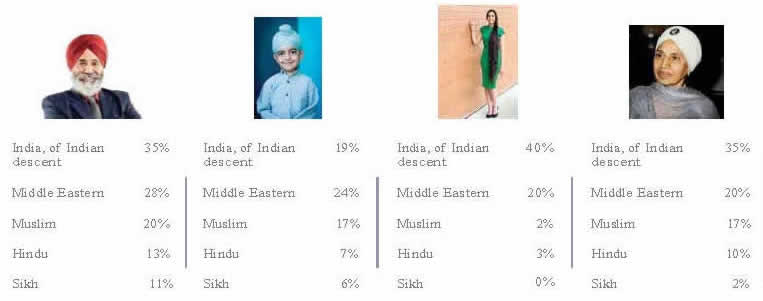
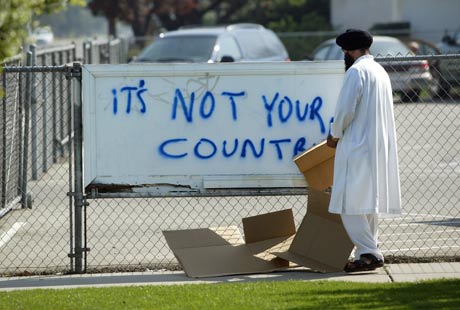
The benefit to tying the turban is that when one wraps the 5 or more layers of cloth, the temples are covered, which minimizes any variance or movement in the different parts of the skull. In other words, wearing a turban automatically provides an acupressure-like cranial adjustment, which provides an aid to brain function and mental activities. Today, in North America, the only religious group that ties turban, are the Sikhs. The practice of wearing the turban has not only become a rarity in many religions, but to the unversed it is associated only with fanatical and militant world terrorists. Since the horror of September 11, 2001, the Sikhs have been profiled and mistakenly identified as being associated with the fanatical Muslim Taliban of Afghanistan. See Mistaken Identity Video. In the days following 9-11, the Sikh community around the world became painfully aware that many people have very little knowledge of the Sikh religion. See In The Aftermath of 911. A great deal of confusion existed then, as some American Sikhs were attacked, some were killed, and questions continue to this day regarding the Sikhs and their high profile tradition of maintaining full beard and tying turban. National Sikh Campaign 2014 Survey of Americans
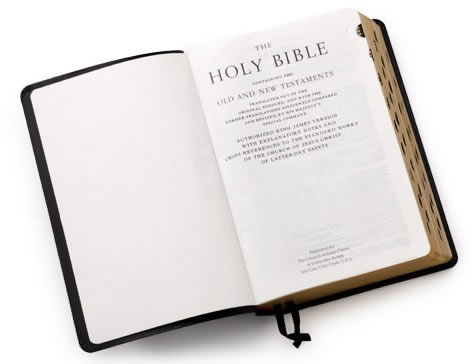
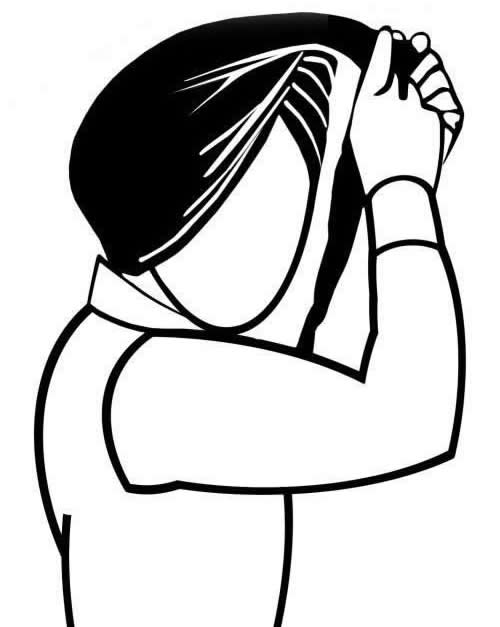
See How To Tie Turban. See TurbanGuideHandout.pdf. See Sikh Style Turbans. See About The Sikhs. See Hair. See Beards. See If Your Dad Doesn't Have A Beard. Since the 19th century in North America the only religious group identified with the wearing of turban is the Sikhs. To American Sikhs as well as Sikhs the world over, the tying of turban is a sacred act. The tenth and last Sikh Guru, Guru Gobind Singh (1666-1708), partly as an act of defiance in the face of the fanaticism and tyranny of the Mughal ruler of India at the time, Aurangzeb, instructed the Sikhs, just as Moses instructed the Israelites, to wear their God-given, unshorn hair under a Turban. Sikhs have sacrificed their lives to protect its honor ever since. The following is a collection of references on how the turban has been regarded throughout history. Turban in the Old Testament
One of several Bible references ... "Once they enter the gates of the court, they are to wear linen vestments. They shall wear linen miter (turban), and linen drawers on their loins." (Old Testament: Ezekiel 44:18-19) The name "turban" is found in this form in European languages only: Greek--turban, English--turban, turbaned; French--turban, tulband; German--turban; Italian, Spanish and Portugese--turbante; Dutch--tulbans; Romanian--tulipan; in Latin, it is the miter; and it is generally traced to the Persian sarband. In Turkish, sarik is the usual name for turban. In ancient Egyptian civilization the turban was considered an ornamental headdress. They called it pjr from which perhaps is derived the word pagari or pugree, so commonly used in the Punjab of India. The Egyptians removed the turban at the time of mourning, a custom which prevailed in the Punjab up to the end of the 19th century. The Sikh apostle, Bhai Gurdas Ji humorously narrates an incident in his Vars, that when an elderly Punjabi came to his home with his turban accidentally off, the women folk took it to be a sign of mourning and started weeping and wailing although no one was dead. The old man's turban, off his head, gave a false alarm.
Americans
In The Aftermath of 9-11
Immediately
after September 11, 2001, an epidemic of hate crimes against minorities
swept the US. The wave of hate crimes and hate violence affected
Muslim Americans and anyone perceived
to be Muslim: Sikh, Arab, South Asian, Latino, and other brown-skinned
Americans. Incidents occurred in every part of the public sphere:
houses, workplaces, airports, school grounds, and street corners,
in nearly every major city in the United States. In targeted communities,
temples were burned, homes vandalized, families threatened, jobs
denied, children bullied, women harassed, men and boys beaten
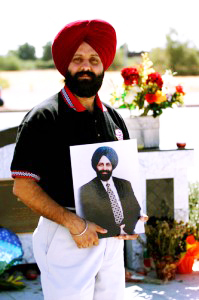
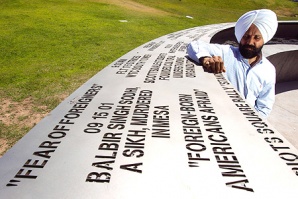
and murdered.* On September 15, 2001 in Mesa, Arizona, Balbir Singh Sodhi, a Sikh man, became the first person murdered in the hate epidemic. Out of the estimated nineteen people murdered in the immediate aftermath, four were turbaned Sikh men. See the 'Dream in Doubt' video.
Many hate crimes and incidents have gone unreported. The federal government officially reported a 1700% increase in ‘anti-Muslim’ hate crimes, from 28 in 2000 to 481 in 2001. This only includes crimes both reported to and recorded by police departments. Community and civil rights organizations have reported thousands of hate incidents in the year following 9-11, including at least nineteen murders. See All About Sikhs From the U.S. Dept. of Justice. Hate crimes are only the tip of the iceberg.
Violent hate crimes are the most obvious manifestation of a wide
range of racism and prejudiced behavior, including verbal harassment,
threats, staring, and avoidance. Qualitative research documents
subtle forms of discrimination that do not appear in police statements
or newspaper reports -- Sikhs, Muslims, and South Asians treated
as perpetually foreign, alien, laughable or un-American. Millions
of Sikh, Muslim, and Arab Americans have experienced subtle or
overt forms of the post 9-11 hate epidemic. Soon after the immediate outbreak of private violence, our government began to allow greater provisions for racial profiling in both immigration enforcement and domestic security programs. While these provisions were meant to protect our national security, they have violated and further alienated groups who fall into designated categories. These groups include turbaned Sikhs who have consistently experienced public violence in the form of employment discrimination, immigration enforcement, targeted security searches, or prisoner abuse. See Gurdwara Security. The hate epidemic persists today. Many believe that these hate crimes disappeared after the initial 9-11 aftermath. However, spikes in hate violence in the United States correspond with terrorism abroad as well as critical moments in the U.S. war in Iraq. At the onset of the war in Iraq, three turbaned Sikh cab drivers were shot in the San Francisco Bay Area alone. Due to inconsistent classification and tracking procedures at local, state, and federal levels, there is no way to provide exact statistics for present-day hate crimes. While the number of hate crimes has not returned to levels reported in the aftermath of 9-11, qualitative research confirms that Sikh, Muslim, and Arab Americans continue to experience subtle yet damaging forms of discrimination in both private and public realms. See MSNBC reporting of the March 2011 murder of Sikh man in California. -- *Sources available upon request at: info@dwf-film.com. See 'Divided We Fall' film.
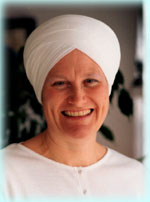
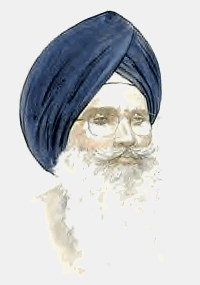
Turbans From Around The World In North America, Sikhs are the only religious group that wear turbans. Sikh men and women wear a cotton turban that serves as a meditation aid that is related to acupressure meridians, and to cover their long and unshorn hair, which is never cut out of a deep respect for God's creation of the human body. Some Sikh men comb out their facial hair and then twist and tuck it up into their turban along with the hair from their head. Sikh Style Turbans Beards Sikhism originated in northern India and Pakistan in the 15th century and is one of the youngest of the world's monotheistic religions. There are an estimated 20 million Sikhs in the world, with some 2 million spread throughout North America, Western Europe, and the former British colonies. The Sikhs have been an established spiritual community in the United States for more than 150 years, since before the 1850's. Sikh
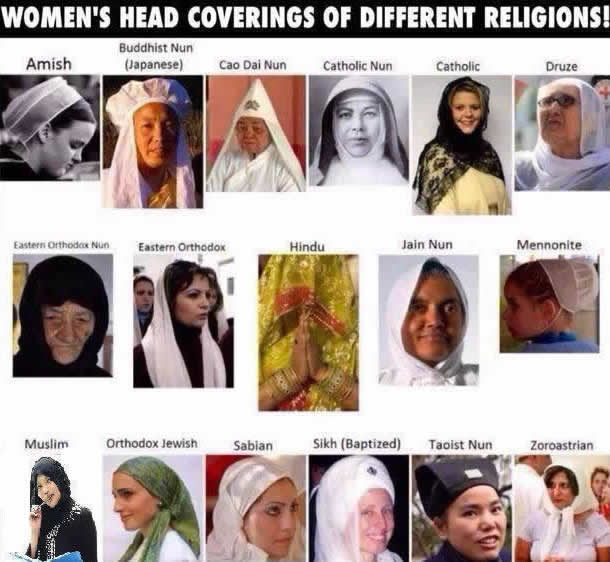
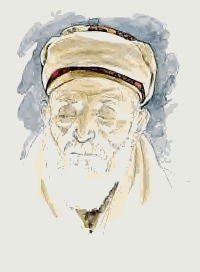
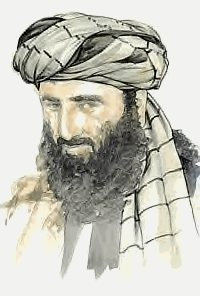
Woman Muslim religious elders from Yemen, often wear a turban wrapped around a cap known in Arabic as a kalansuwa. These caps can be spherical or conical, colorful or solid white, and their styles vary widely from region to region. Likewise, the color of the turban wrapped around the kalansuwa varies. White is thought by some Muslims to be the holiest turban color, based on legends that the prophet Mohammed wore a white turban. Not all Muslims wear turbans. In fact, few wear them in the West, and in major cosmopolitan centers around the Muslim world, turbans are seen by some as passé. Afghan men wear a variety of turbans, and even within the Taliban, the strict Islamic government that controls much of the country, there are differences in the way men cover their heads. For example, he may wear a very long turban … perhaps two twined together … with one end hanging loose over his shoulder. The Taliban ambassador to Afghanistan, on the other hand, favors a solid black turban tied above his forehead. And some men in Afghanistan do not wear turbans at all, but rather a distinctive Afghan hat. Muslim
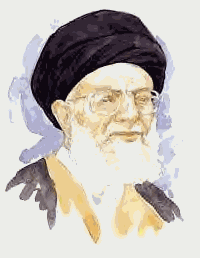
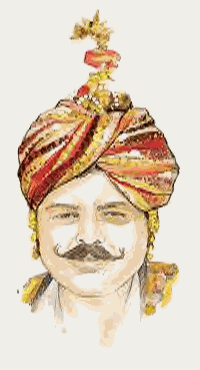
Cleric Iranian leaders wear black or white turbans wrapped in the flat, circular style as is the case of the Iranian supreme leader Ayatollah Ali Khamenei. The Greek word turban is thought to have originated in biblical times. The turban is called a sarband, or a dulband among Persians and in some areas of Iran. Indian men sometimes wear turbans to signify their class, caste, profession or religious affiliation … and turbans in India can be very elaborate. However, turbans made out of fancy woven cloths and festooned with jewels are not unique to India. As far away as Turkey, men have used the head gear to demonstrate their wealth and power. Iranian
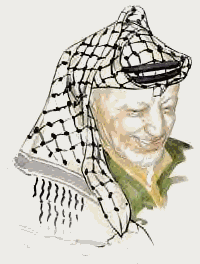
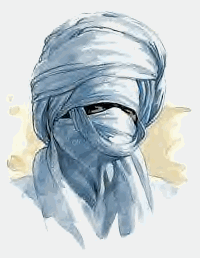
Cleric The kaffiyeh is not technically a turban. It is really a rectangular piece of cloth, folded diagonally and then draped over the head … not wound like a turban. Yasser Arafat, the Palestinian leader, has made the kaffiyeh famous in recent times. However, the kaffiyeh is not solely Palestinian. Men in Jordan, Saudi Arabia and the Arab Persian Gulf states wear kaffiyehs in colors and styles that are particular to their region. Jordanians, for example, wear a red and white kaffiyeh, while Palestinians wear a black and white one. And a man from Saudi Arabia would likely drape his kaffiyeh differently than a man from Jordan. The black cord that holds the kaffiyeh on one's head is called an ekal. Desert peoples of Africa and elsewhere have long used the turban to keep sand out of their faces. Members of nomadic tribes have also used turbans and white kaffiyeh, while Palestinians wear a black to disguise themselves. And sometimes, the color of a person's turban can be used to identify his tribal affiliation from a distance across the dunes. In some parts of North Africa many men wear a turban of a very light blue color.
The
Seattle Times
Don't link turbans to terrorism. America is not a country where the majority of people wrap their skulls in cloth before heading out of the house. Perhaps that explains the current confusion over turbans. In many regions of the globe, swaddling the head in fabric is simply a natural response to the scorching heat and dust. Scholars believe it was an ancient people living under a merciless sun who first invented the turban. Like other types of clothing, the turban means different things depending on who is wearing it and how it is worn. But in the wake of recent terrorist attacks, the turban, originally a practical idea for protection, has become a symbol many Americans associate with terrorists. In SeaTac last week, a man was charged with attacking a turban-wearing Sikh cab driver, calling him a "butcher terrorist." In Seattle, a man was arrested after he allegedly tried to choke a Sikh, telling him, "You have no right to attack our country." In Arizona, a man shot a Sikh gas-station owner to death, later explaining to authorities: "I'm a patriot." (See MSNBC reporting of the March 2011 murder of Sikh man in California. See Murder of Six Sikhs in Oak Creek, Wisconsin, August 5, 2012.) Hundreds of other assaults on Sikhs have been reported across the country, a trend that strikes many as bizarrely misguided. Yes, Sikhs wear turbans. But they have no connection to the Islamic extremists now wanted by the U.S.. Rather, Sikhs are members of the world's fifth-largest religion, which traces its roots to northern India and espouses egalitarianism. President Bush described the new American enemy as shadowy and hard to find, which may explain why some Americans are grasping for a way to identify terrorists. But equating the ancient headgear with terrorism shows how little is known about turbans. Lesson No. 1: All turbans are not the same. Fabric head wraps and head coverings are common in a wide swath of the world, from North Africa across the Middle East and into Central Asia. At times, turbans have even been found on the heads of fashion-conscious Europeans and atop the craniums of American pop-culture icons. Like other types of clothing, the turban means different things depending on who is wearing it and how it is worn. To see every turban-wearer as a terrorist is like assuming every person who wears shoes is a criminal. A turban is a very long and narrow piece of cloth (12 feet is not an unusual length) made of cotton, silk or synthetics. It is wound around the head and held on by its own tension, gravity, or a chin strap. The English word turban is believed to have come from the Persian word dulband, a word which is also thought to be the etymological predecessor of "tulip" and of the Spanish word for hammerhead shark, torbandalo. Though no one knows exactly when and where the turban originated, carvings left by the Assyrians, who lived 3,000 years ago in the area that is now Iraq, show turbans on the heads of kings. That means that before there was Islam, or even Christianity, there were turbans. It also means that by 1000 BCE, the turban had evolved from a strictly utilitarian piece of clothing into something used to connote nobility and power. The turban is like other pieces of fashion in this way, said Brannon Wheeler, associate professor of Islamic studies at the University of Washington. Just as shoes evolved from a practical foot covering into an item of clothing that reveals a person's class and origins, so turbans evolved from a simple head covering into something that identifies people along cultural, religious, political and social lines. Those seem to be distinctions many are unaware of. John Cooksey, a Republican congressman from Louisiana, recently offered this suggestion for weeding out terrorists: "If I see someone come in and he's got a diaper on his head, and a fan belt wrapped around the diaper on his head, that guy needs to be pulled over and checked." Cooksey later apologized, saying he was referring only to Osama bin Laden, but clearly the way he described the offending headgear shows a lack of turban savvy. In the picture of bin Laden posted on the FBI's Most Wanted list, the fugitive Saudi millionaire is wearing a white cloth turban wrapped in a circular, spiraling fashion. This is not the type of head covering that requires what Cooksey called a "fan belt", a thick black cord known to people in the Middle East as an ekal. The ekal is used to hold on a kaffiyeh, the patterned head covering made famous by Palestinian leader Yasser Arafat. Kaffiyehs are worn by men in Jordan, Saudi Arabia and the Arab Persian Gulf states. They are rectangular pieces of cloth folded diagonally and draped over the head. And technically, they're not even turbans. The American tendency to link turbans with terrorism may stem from the Iran hostage crisis, with its images of Ayatollah Khomeni and his black turban. But in most of the Muslim world, the wearing of a turban symbolizes simply religious or political power. Many Muslim spiritual leaders wear a white turban wrapped around a spherical or conical hat known as a kalansuwa. But, cautioned UW history professor Frank Conlon, "Not all Muslims wear turbans, and not all people who wear turbans are Muslim." In the past, emperors and leaders have worn grand turbans with feathers and jewels added as flourishes. Today, in rural regions from North Africa to India, poor farmers and nomadic people of various religions cover their heads with simple turbans, the colors and styles of which sometimes identify them as members of a particular tribe or community. And turbans have uses beyond the obvious. In Morocco, old men have been known to store money in the folds of their turbans. In the desert, turbans are wrapped around the face and used as a protective gauze to keep blowing sand out of the eyes. Before there were police and handcuffs, legend has it that turbans were used to tie up captured enemies. These days, in more cosmopolitan and urban areas of the Middle East, the turban is a bit out of vogue, seen as a relic of the past by young people clamoring for the styles of the West. At the same time, in the US, the turban has been embraced among some African Americans, who see it as an Afro centric fashion. Soul singer Erykah Badu, for example, has often worn a towering turban. The irony of the American focus on turbans in the wake of the terrorist attacks is that, at least in this country, turbans are a very poor predictor of a person's involvement in terrorist violence. "Needless to say," said Ellis Goldberg, head of the Middle East studies center at the UW, "none of the hijackers was wearing any type of turban."
Sikh
Woman
The Sikh Research Institute
(SikhRI) reported today that Arpinder Kaur, 28, of San Antonio,
Texas has become the first turbaned pilot hired by a commercial
airline in the States. As a Sikh, she has helped pave the way
for both Sikh men and women who wear a turban or dastaar to fulfill
their passion for flying. No longer does flying just have to be
an extra-curricular activity for these Sikhs, but it can also
be an every-day job! Her passion for flying first started when at the age of 15 she got to sit in the cockpit of an airplane when moving from Panjab. Despite having a degree in Information Systems and her mother’s belief that it was too dangerous for a girl to be a pilot, Kaur has chosen to follow her passion, while using it as a means for supporting her family. Kaur
said it was the love and support of her husband, Pritpal Singh
that pushed her forward on the path toward becoming a pilot. Kulbir
Singh Sandhu, captain with AMR mentored her throughout her aviation
career. From 2003 to 2005 Kaur was trained by Jesse Sherwood in
Kansas. With the help of these individuals and others along with
her own perseverance and determination, Kaur and American Airlines
have shown that accommodation and not assimilation is the way
to harness the strength of diversity in America. "From
a woman all men are born.
The 12 Aspirations of the Sikhs are to:
Special Note: It is not the customary practice of the followers of Sikh Dharma to proselytize others. Sikhs often express the term "Sat Kartar," i.e., "God is the Doer." In this sense meaning, only those with such destiny will become Sikhs. **Sadhana is a word derived from the Sanskrit words Sa, meaning all, and Dhana, meaning blessings. "The problem at this moment is the majority of us do not want to do sadhana (spiritual practice). These unfortunate people are really cursed. With all the teachings and all the knowledge, isn't it a curse? It is. Sometimes you use the children as an excuse, sometimes the husband. One way or the other, there is an excuse. To be realistic with you, an excuse is an excuse, and sadhana is sadhana. I know on some days, I am dead tired. I feel I can't do my sadhana. Then what do I do? I go to the bathroom, I take cold water, and I wash my face again and again, and again and again, until I understand that I am fully awake. When I am doing my sadhana, sleep sometimes wants to overtake me; I get tired. Sometimes I get home late and I have to get up very early. Then I do pranayam and I apply some yogic locks. I do a lot of things that I have learned and I go through it as gracefully as a humble human being should." -- Yogi Bhajan "The greatest reward of doing Sadhana is that the person becomes incapable of being defeated. Sadhana is a self-victory, and it is a victory over time and space. Getting up in the morning is a victory over time, and doing it (sadhana) is a victory over space." -- Yogi Bhajan ^Banis are specific passages taken from the Guru and read each day. Good guys and gals wear turbans
Sikhs around the world is next.
Science and Practice of Meditation and its Benefits I am a Born Again American, conceived in Liberty Sing Along With These Born Again Americans All About Sikhs From the U.S. Dept. of Justice The 1974 Transition of Bhai Sahib Dyal Singh See Why Sikhs Keep Their Hair Unshorn See What Happens When You Meditate To The First Teachers of Sikh Dharma Ek Ong Kar Sat Nam Siri Wahe Guru If Your Dad Doesn't Have A Beard History of Sikhs In America Video Lessons Learned From The Sikhs The New York Times About Sikhs Americans Get An 'F' In Religion
Sikh Council on Religion and Education Sikh American Legal Defense and Education Fund
More Web sites by
KhalsaWebMasters.com 
|
|

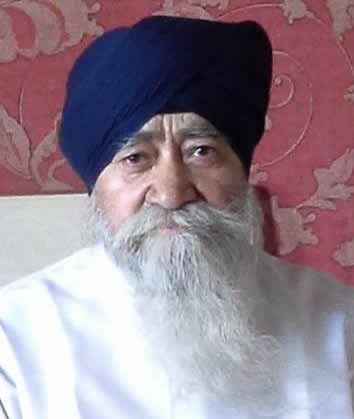

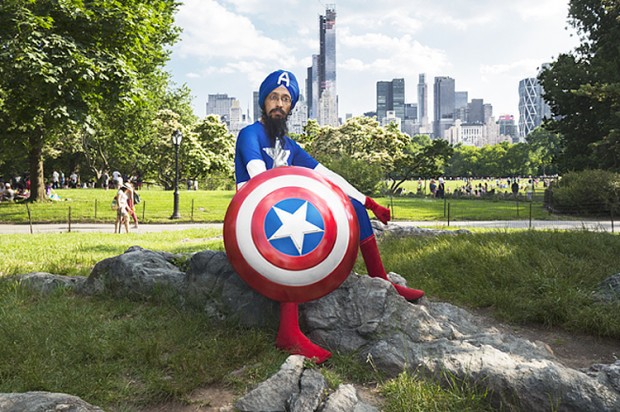
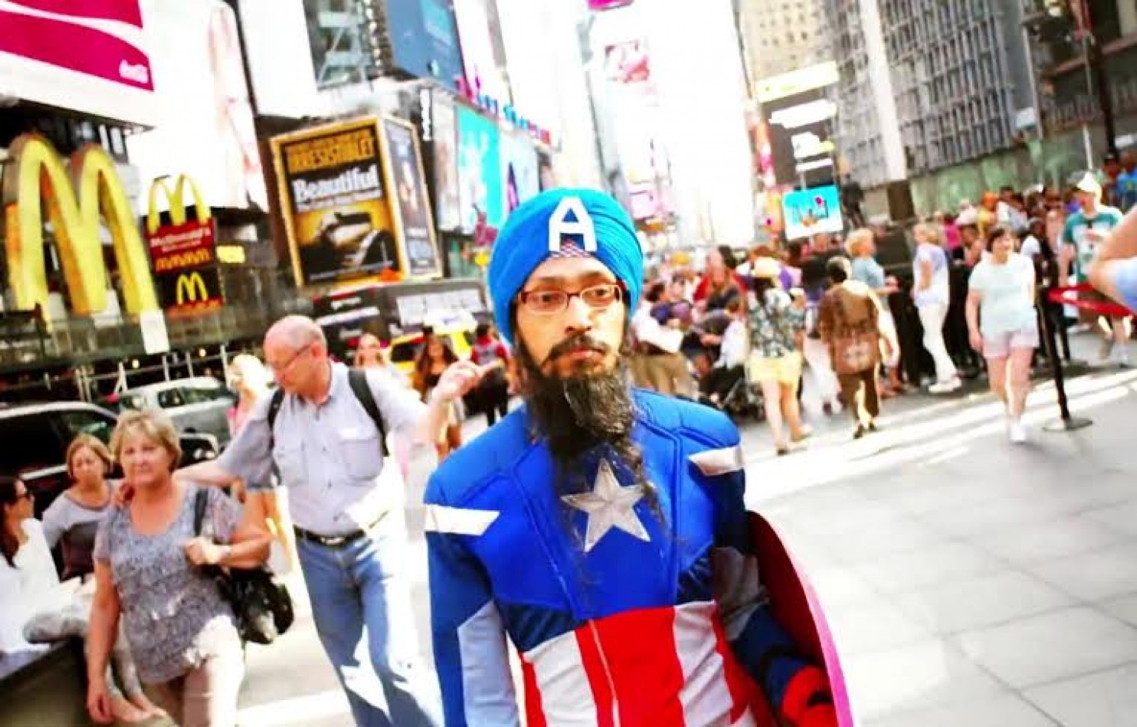

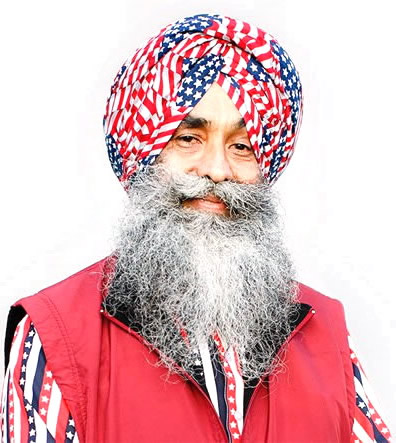







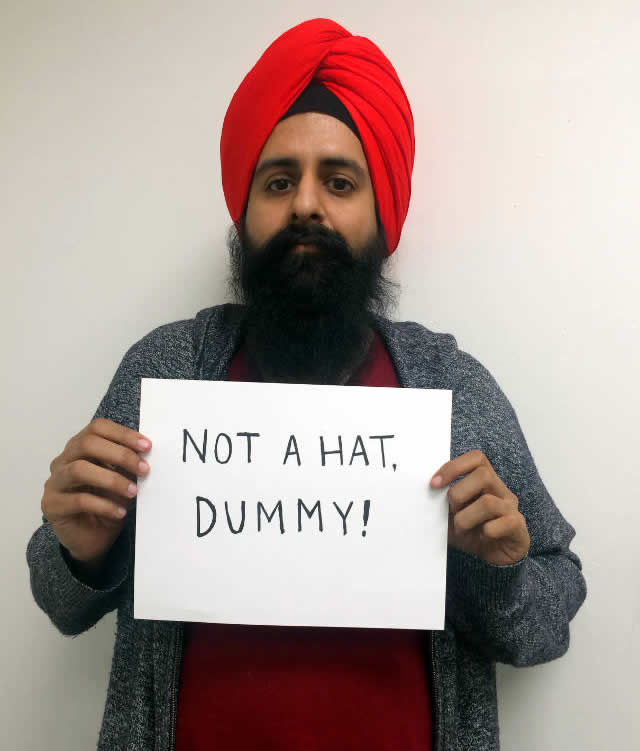
 . Why do you wear a turban?
 . Do women wear turbans, too?
 . But I have a friend who is a Sikh and doesn’t wear a turban. Why not?
 . Do the colors of the turban mean anything?
 . Does it go on like a hat?
 . How many kinds of turbans are there?
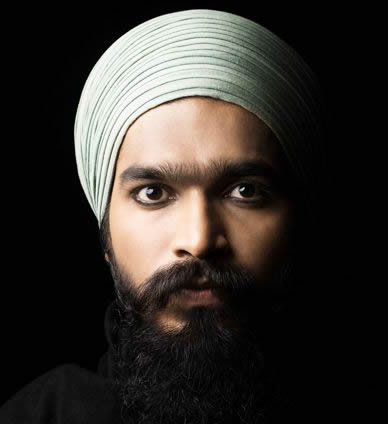
 . Where do you get your turbans?
 . Were you born with a turban on?
 . Do you wear it to sleep or shower?
 . Can I touch your turban?







 Believe God is Truth and Word
is Guru.
Believe God is Truth and Word
is Guru.